It was a relationship that produced some exceptional artists, statesmen and authors, as well as “ordinary” people who survived to carry on their Jewish religion and traditions that would have otherwise been consigned to oblivion.
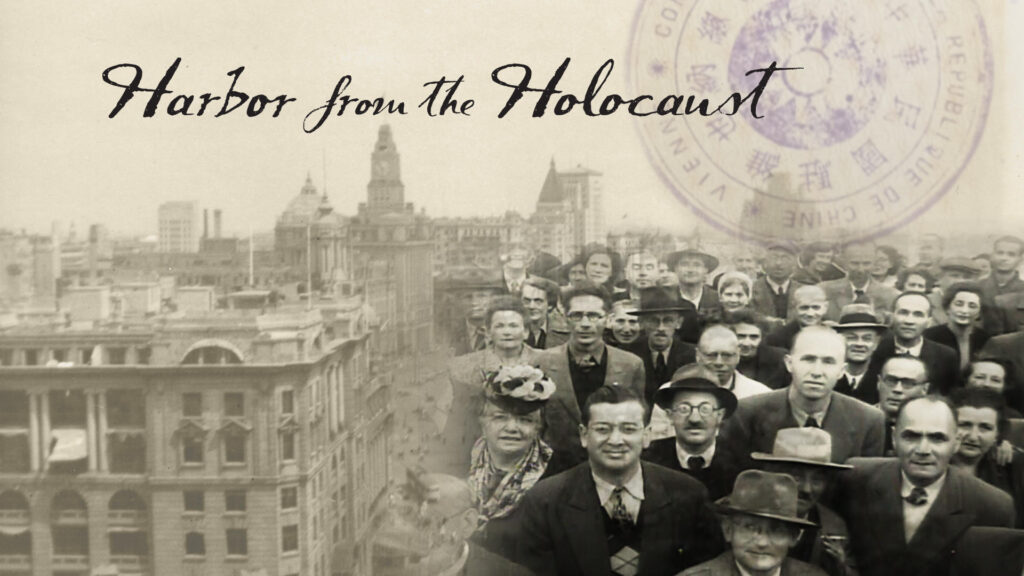
This documentary takes a captivating look at why Shanghai was uniquely positioned, through geo-political, cultural and historical influences, to allow this remarkable influx to happen, due to those past relations with Jews predominantly from the Middle East, the Iberian Peninsula and Russia, and because of its centuries of control by and openness to foreigners as a vigorous center of trade and commerce.
This story cannot be viewed in black and white, good vs. evil, suffering vs. thriving, wealthy vs. poor. The story, much like the city itself, is nuanced and complex, incorporating many kinds of foreigners, many classes of Chinese, many kinds of Jews, and many layers. Shanghai was not a place of tolerance and openness, so much as it was a place of fractionalized, disparate forces which were sometimes competitive and sometimes complimentary, but always existed within tenuous and often difficult transactional alliances. Even the people whose stories will be shared have very different tales of how they lived in Shanghai, what their families experienced, and how they were able to function on a day-to-day basis.
Rivaling all elements and in tragic contrast to those who could not escape, this is a Holocaust story of life.


Darryl Ford Williams is the former Vice President of Content for WQED (Pittsburgh-PBS) leading the creation, development, production and delivery of all new and existing local, national, international and syndicated television, radio, interactive and educational programming. She was the Executive Producer of Harbor From The Holocaust, managing the creation and execution of this PBS documentary and multi-faceted initiative on European Jewish people who fled Nazi persecution and sought refuge in Shanghai. She led the effort for the PBS series American Masters, August Wilson: The Ground On Which I Stand serving as Executive Producer for this highly acclaimed documentary. Under her leadership, productions have taken WQED documentary teams across the country and abroad to Kenya, Poland, Vietnam and Austria for productions distributed to the PBS system.
Ms. Ford Williams’ work has been recognized with many awards, including several Emmy Awards in addition to numerous Emmy nominations; a nomination for an NAACP Image Award.
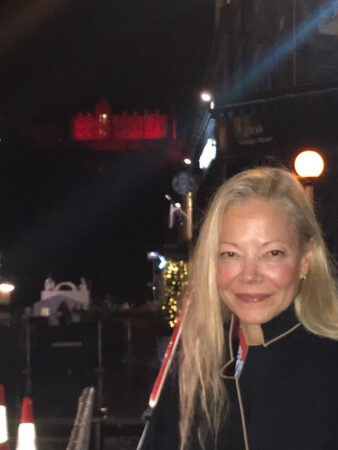
She has developed large-scale, award-winning Chinese language initiatives for K-16, created documentary films, and coordinated nationally recognized art installations.
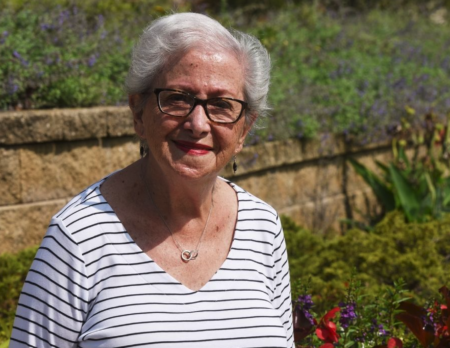 Doris Fogel was 4 in 1939 when she and her mother left Berlin for Shanghai. They thought their boat would take them to the U.S., but it was turned away and went through Panama before ending up in Shanghai. Despite being educated at the University of Berlin, Doris’ mother worked in the Ghetto’s soup kitchen to survive. She recalls hiding under the desks at school, not knowing if her mother survived the bombing that liberated the city from the Japanese. The family was on the second boat out of Shanghai in 1947. She celebrated her 13th birthday on the ship to the US, weighing just 68 pounds.