Maxine Gordon will be attending to comment on the film.
A French music lover befriends a once-great American jazz artist and attempts to save him from self-destruction in this moody drama. Saxophonist Dexter Gordon portrays Dale Turner, a fictional musician inspired by a number of famed jazz figures, including Bud Powell and Lester Young. Largely forgotten in his home country, Turner has moved to Paris in search of a more appreciative audience. He finds it in the form of Francis Borler (Francois Cluzet), a bebop aficionado who befriends the expatriate player.  Borler soon becomes familiar with Turner’s darker side, including his struggles with alcoholism, drug addiction, and depression. Fearing for the musician’s life, the fan becomes his caretaker, an arrangement that leads to a brief improvement in Turner’s health and fortunes but places great emotional strain upon them both. Director Bertrand Tavernier pays great attention to the visual and aural details of the jazz world, with outstanding musical supervision provided by Herbie Hancock. ‘Round Midnight’s greatest asset, however, is Gordon’s Academy Award-nominated performance, informed by his own life experiences. His naturally fascinating presence combines with the film’s obvious love of the music and its milieu to provide what many have hailed as one of the more authentic and affectionate presentations of the jazz world on the silver screen.
About Maxine Gordon
Born in New York City, Maxine has a long history in Jazz which began as a teenager when she and her friends would go to Birdland and the Village Vanguard to hear Miles Davis, Sonny Rollins, John Coltrane, Art Blakey, and the classic Jazz Messengers group with Lee Morgan, Wayne Shorter, and Bobby Timmons during the late 1950s and early 1960s. She began her career in Jazz as a road manager for Gil Evans when he had a large group and then worked in Europe as a tour manager for groups and Festivals. She was encouraged to continue her work with Jazz musicians by her friend Harold Vick who suggested she help manage a group he was in that had a contract with Columbia Records. It became apparent that many Jazz musicians knew quite a lot about the business but could use someone to make calls and talk to club owners and promoters on their behalf.
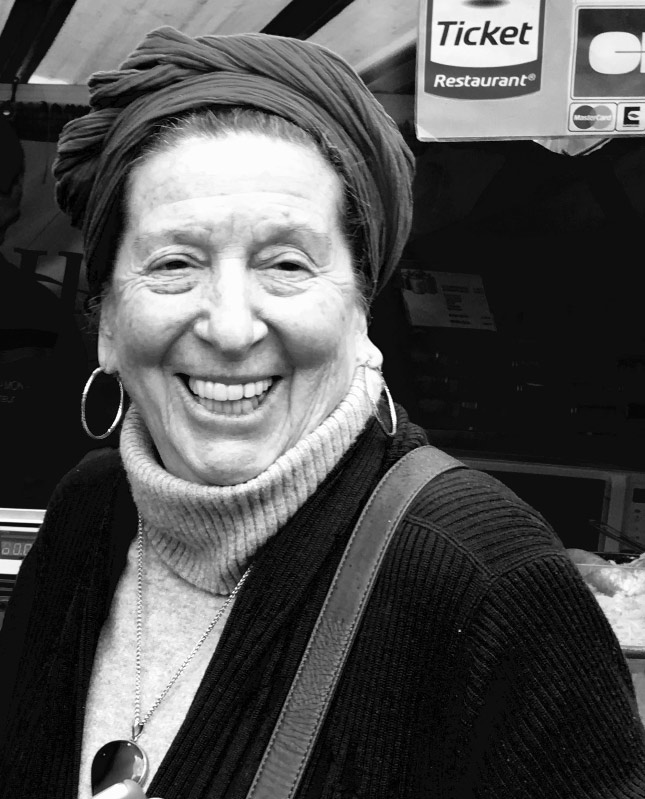 She learned the business of recording by helping her close friend Shirley Scott (“Queen of the Organ”) and producing her album One for Me with Harold Vick and Billy Higgins for Strata-East Records. This was the first album where Shirley was able to pick the compositions, write the music, and play exactly what she wanted to play. The relationship with Shirley, as friends and partners, continued until Shirley’s death in 2002.
Maxine began to organize and write grant proposals for Jazz musicians when there were composition grants at the NEA. She learned to understand recording contracts and worked with artists and their lawyers to make the best deals possible.
On a tour of Europe for a promoter there, Maxine was sent to assist Dexter Gordon and his group to travel to Scandinavia by circumventing Italy where there was a train strike. Dexter had been in Europe for 14 years and when Maxine met him, he started to talk about coming home. Dexter and Maxine formed a partnership and spent six months planning his return.
In the late 70s, Michael Cuscuna and Maxine opened an office down the block from Columbia Records on 53rd Street when Dexter and Woody Shaw signed to the label. Michael was their producer and Maxine was the personal manager and executive producer for the recordings.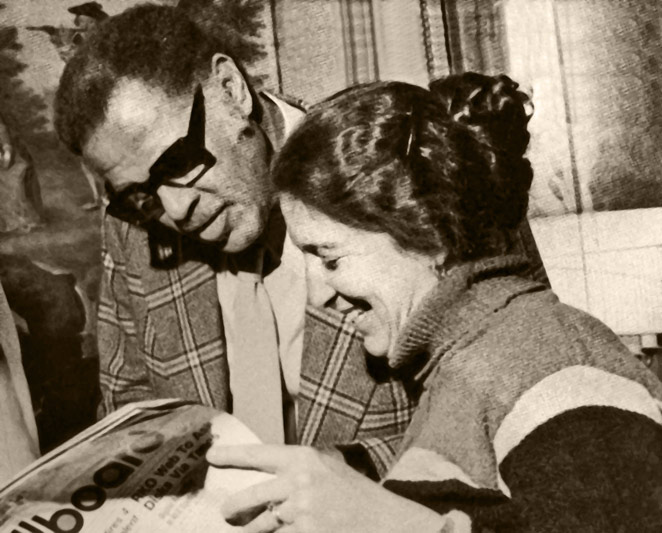
In 1978, Maxine and Woody Shaw became the parents of Woody Louis Armstrong Shaw III. Eventually, Maxine and Woody Shaw (Woody III’s father) separated, and in the early 1980s Maxine retired from the music business. From then on, Maxine, Dexter, and Woody III lived in Cuernavaca, Mexico for half of every year. During this time, Maxine and Dexter were married. Throughout this period of rest and recuperation from years on the road, Dexter was offered the lead in the film Round Midnight, directed by Bertrand Tavernier. He accepted the part and Dexter, Maxine, and Woody III went to Paris for four months while Dexter worked on the film.
When Dexter died in April 1990, Maxine worked as a Music Producer for Bill Cosby on his game show, You Bet Your Life, with Shirley Scott who was the musical director. She then returned to college to get her BA degree at CUNY, a Master’s Degree in Africana Studies from NYU, and entered the PhD Program in African Diaspora History with a MacCracken Fellowship to support her work. She gives lectures in the U.S. and abroad and seminars on Bebop and Dexter Gordon, on expatriate Jazz musicians, on Chano Pozo and the Afro-Cuban religious influence on Bebop, and on other related subjects associated with her work on Dexter Gordon.
“You do not need to know a lot about jazz to appreciate what is going on because, in a certain sense, this movie teaches you everything about jazz that you really need to know.” – Roger Ebert Chicago Sun Times
“No actor could do what the great jazz saxophonist Dexter Gordon does in ‘Round Midnight.” – Janet Maslin New York Times